
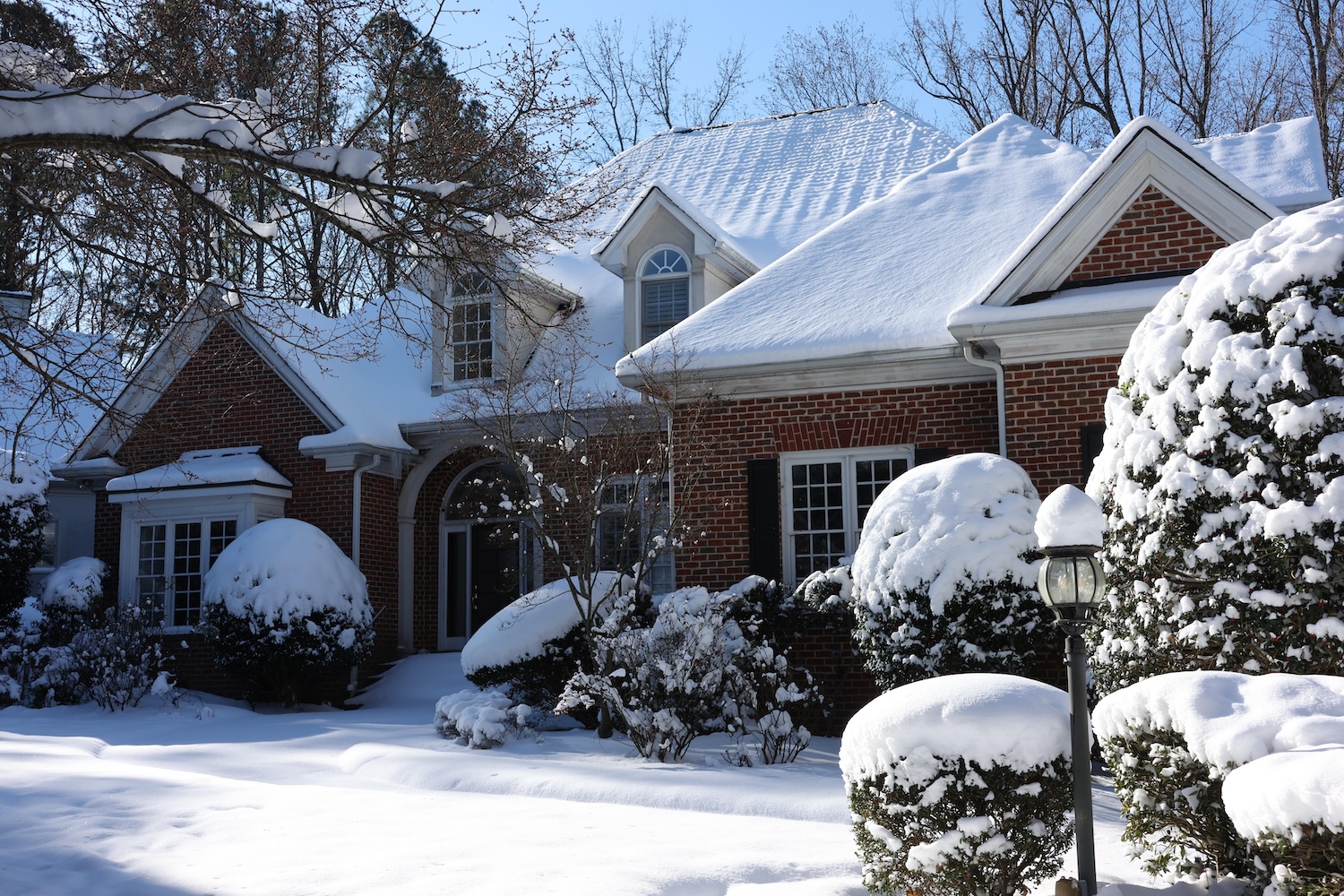
What does homeowners insurance actually cover when snow, ice, freezing temperatures, fallen trees, or winter weather damage your home or car?
The first snowfall in Colorado has a way of changing the conversation overnight.
Suddenly, homeowners are thinking about frozen pipes, heavy snow on the roof, icy tree branches, cars parked safely in the garage, and whether the house is really ready for another Colorado winter.
It also brings out plenty of assumptions about insurance.
Some are partly true. Some depend entirely on how the damage happened. And others mix up homeowners and auto insurance in ways that can lead to an unpleasant surprise when it’s time to file a claim.
So, before the first real winter storm rolls through, let’s put five common winter insurance myths to the test.
Myth #1: Home Insurance Covers Every Kind of Water Damage
Verdict: False.
“Water damage” sounds like one category. From an insurance perspective, how the water entered your home can make an enormous difference.
For example, a pipe that suddenly freezes and bursts is very different from melting snow that accumulates outside and enters your home at ground level.
The Insurance Information Institute1 explains that homeowners and renters insurance generally provides coverage for water damage from events such as burst pipes, wind-driven rain, and ice dams. However, standard homeowners policies don’t cover flooding. Water entering from the ground up due to melting snow may instead require flood insurance.
Sewer and drain backups can create another distinction. Depending on your policy, that type of loss may require additional coverage or an endorsement.
In other words, asking “Do I have water damage coverage?” isn’t specific enough.
A better question is:
What caused the water to enter the house, and does my particular policy cover that cause of loss?
This is also why preparation matters. Our Colorado Home Maintenance Checklist Before the First Freeze covers some of the practical things homeowners can do before temperatures drop, including checking plumbing, gutters, roofing, trees, and other areas that become more vulnerable during Colorado’s colder months.
Myth #2: If a Tree Falls, the Tree’s Owner Always Pays
Verdict: False.
Imagine your neighbor’s tree comes down during a heavy snowstorm and lands on your house.
Because it was their tree, they automatically pay for your damage, right?
Not necessarily.
When a tree or branch falls because of weather, insurance responsibility isn’t determined simply by whose property the tree originally stood on. The circumstances surrounding the loss including whether negligence was involved can matter.
For your own home, homeowners insurance commonly covers damage to an insured structure caused by a falling tree when the loss is covered under the policy. The NAIC2’s consumer guide identifies trees and other falling objects as covered perils under several common forms of homeowners coverage.
But every situation isn’t identical.
For example, questions may arise if a tree was visibly dead or hazardous before it fell and the property owner knew about the danger but failed to address it.
That’s why a fallen-tree claim isn’t as simple as:
Their tree = their insurance.
The cause of the fall, the property damaged, the coverage involved, and potential negligence all need to be considered.
And before snow starts weighing down Colorado’s trees, take a look at our Colorado Home Maintenance Checklist Before the First Freeze for another reminder to inspect potentially hazardous branches around your property.
Myth #3: Snow Damage Is Automatically Covered in Every Situation
Verdict: False.
There is some good news here: standard homeowners insurance commonly provides protection against certain winter-weather losses.
The Insurance Information Institute3 states that standard homeowners policies provide coverage for damage caused by wind, snow, and ice to property and personal possessions. Its winter-storm guidance also identifies damage to structures from the weight of ice and snow as a type of winter storm loss generally covered by homeowners insurance.
But that doesn’t mean every problem involving snow is automatically an insurance claim.
Insurance policies contain coverage limits, deductibles, exclusions, conditions, and definitions that determine whether a particular loss is covered.
There can also be an important distinction between a sudden covered event and damage related to deterioration, deferred maintenance, or normal wear and tear. The Insurance Information Institute4 notes that a standard homeowners policy does not pay for routine wear and tear.
That’s one reason homeowners shouldn’t wait until snow is sitting on the roof to start thinking about winter risk.
Our A Month-by-Month Guide to Colorado Home Insurance Claims looks at how different weather-related risks tend to emerge throughout the year, while Homeowners Insurance: Read This Before the Next Storm goes deeper into why understanding your policy before severe weather arrives matters.
Myth #4: My Car Is Covered Because It Was Parked in My Garage
Verdict: False.
A garage may physically protect your car.
That doesn’t mean your homeowners policy insures the car itself.
Suppose a heavy winter storm damages part of your garage and debris falls onto the vehicle parked inside. There could potentially be two different insurance questions:
What covers the damage to the garage?
and
What covers the damage to the car?
Damage to the structure may fall under homeowners coverage if the cause of loss is covered by the policy.
Damage to the vehicle, however, generally falls under auto insurance.
The National Association of Insurance Commissioners5 explains that comprehensive auto coverage pays for damage caused by non-collision events such as hail, windstorm, flood, fire, and theft.
Comprehensive coverage is not the same thing as the liability coverage required to drive.
So simply having an auto insurance policy doesn’t necessarily mean you have comprehensive coverage. It depends on the coverages you’ve selected and, when applicable, requirements from a lender or lessor.
The garage changes where the car is parked.
It doesn’t turn the car into part of the house.
Myth #5: Home Insurance Covers My Vehicle If Something in My House Damages It
Verdict: False.
This is closely related to the previous myth, but it’s one of the easiest insurance lines to blur.
Imagine:
- A tree falls through your roof and onto the car.
- Part of the garage collapses under heavy snow and damages the vehicle.
- A large object from the house falls onto a vehicle during a covered event.
It’s easy to assume that because the damage started with the house, homeowners insurance should cover everything involved.
That’s generally not how the vehicle portion works.
The Insurance Information Institute6 specifically notes that damage to a vehicle from fallen tree limbs or ice is covered under optional comprehensive auto coverage.
Similarly, the NAIC7 describes comprehensive coverage as protection for non-collision damage to your vehicle from events including weather.
This means a single winter storm could potentially involve more than one policy.
Your homeowners policy might respond to covered damage to the house or garage, while your auto policy could respond to covered damage to the vehicle.
That’s why looking at your insurance as one big bucket called “coverage” can be misleading.
Different policies protect different things.
The Real Lesson: Winter Claims Depend on More Than What Was Damaged
If there’s one theme behind all five myths, it’s this:
Insurance coverage often depends on how the damage happened not simply what was damaged.
Water from a burst pipe isn’t necessarily treated the same as water entering your home from a flood.
A neighbor’s tree falling into your yard doesn’t automatically mean the neighbor is responsible.
Snow-related damage isn’t automatically covered simply because snow was involved.
And parking a vehicle inside your garage doesn’t move it from your auto policy onto your homeowners policy.
Before Colorado gets deep into winter, take a few minutes to understand what your policies actually cover.
If it’s been a while since you’ve looked at your homeowners coverage, our Homeowner Basics 101: Your Annual Insurance Checklist (Colorado) is a good place to start. You can also talk with your Mitchell Insurance Group agent about the specific limits, deductibles, endorsements, and exclusions that apply to your policy.
Because the best time to discover how your insurance works isn’t while you’re standing in the snow looking at the damage.
Frequently Asked Questions
Does homeowners insurance cover frozen pipes?
Homeowners insurance generally covers sudden water damage caused by a frozen or burst pipe, but coverage depends on the circumstances and terms of the policy. Policies may include requirements related to maintaining heat or taking reasonable steps to prevent freezing, particularly when a home is vacant or unoccupied. Review your individual policy with your insurance agent.
Does homeowners insurance cover damage from the weight of snow or ice?
Many homeowners policies provide coverage for damage caused by the weight of snow, ice, or sleet. However, coverage depends on the policy, cause of the damage, exclusions, deductible, and other circumstances surrounding the claim.
If my neighbor’s tree falls on my house, whose insurance pays?
It depends on why the tree fell and whether negligence was involved. When a healthy tree falls because of a storm, the homeowner whose property was damaged may generally look to their own homeowners coverage. Circumstances can be different if the tree presented a known hazard and the owner failed to address it.
Does homeowners insurance cover a car parked inside my garage?
Your homeowners policy generally does not insure the vehicle itself simply because it is parked inside your garage. Damage to the car from weather, falling objects, or similar non-collision events would typically depend on whether the vehicle has applicable comprehensive auto coverage.
Does homeowners insurance cover flooding caused by melting snow?
Standard homeowners insurance generally does not cover flood damage, including water that enters a home from the ground up due to melting snow. Flood insurance is separate from a standard homeowners policy. The exact cause of the water intrusion matters, so talk with your insurance agent if you’re unsure how your coverage would respond.
Sources:
- https://www.iii.org/article/how-to-protect-your-home-from-water-damage
- https://content.naic.org/sites/default/files/publication-hoi-pp-consumer-homeowners.pdf
- https://www.iii.org/press-release/triple-i-mitigation-reduces-winter-weather-risks-for-homes-vehicles-121824
- https://www.iii.org/article/what-is-covered-by-standard-homeowners-insurance
- https://content.naic.org/es/node/7435
- https://www.iii.org/article/winter-storm-alert-how-to-recover-and-rebuild-with-insurance
- https://content.naic.org/insurance-topics/auto-insurance
